
Walking through the Gardens at night is a unique sensory experience. As the light fades and visibility becomes limited, sound, smell and touch take over. Daytime bird song is replaced by a chorus of frogs and insects, occasionally punctuated by the squeak of a bat or call of a tawny frogmouth. The tang of sun-warmed eucalypt fades, overtaken by the rich scent of dewy earth and night-blooming flowers.
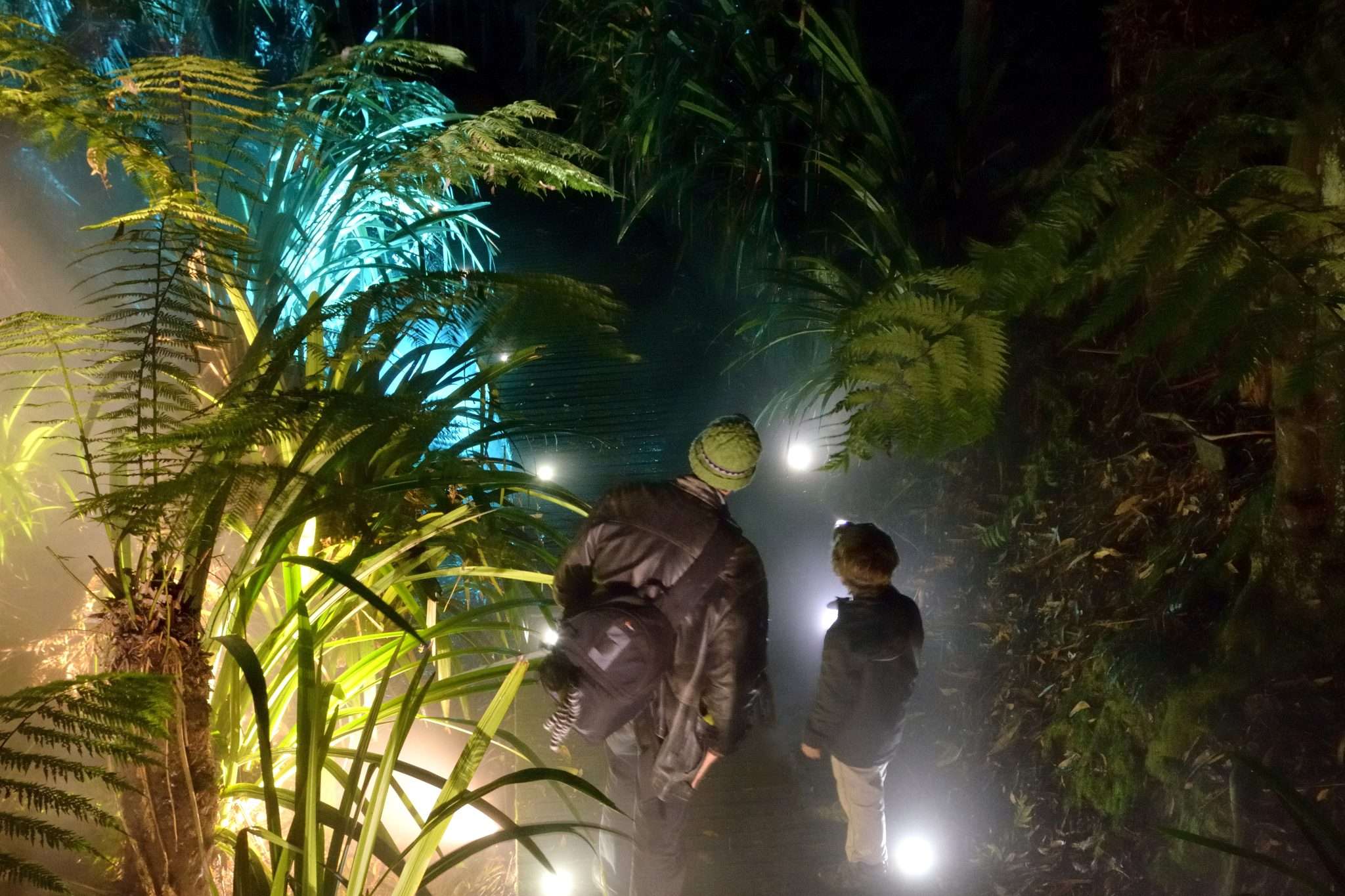
Exploring the Gardens after dark. Credit: ANBG
Each year thousands of school students visit the Australian National Botanic Gardens (ANBG) after hours for Ranger-guided ‘Twilight’ tours. During this exciting nighttime experience students learn about Australian plants and meet some of the Gardens’ nocturnal residents, including possums, kangaroos, bats and night birds.
Tours are led by Education Rangers, who use spotlights to guide participants through the Gardens searching for eyeshine (the eerie glow caused by light reflecting off the back of an animal’s eye). Twilight tours are ideal for exploring themes of nocturnal ecology such as why some animals forage at night, how plants that flower at night attract pollinators, and how animals find their way around at night.
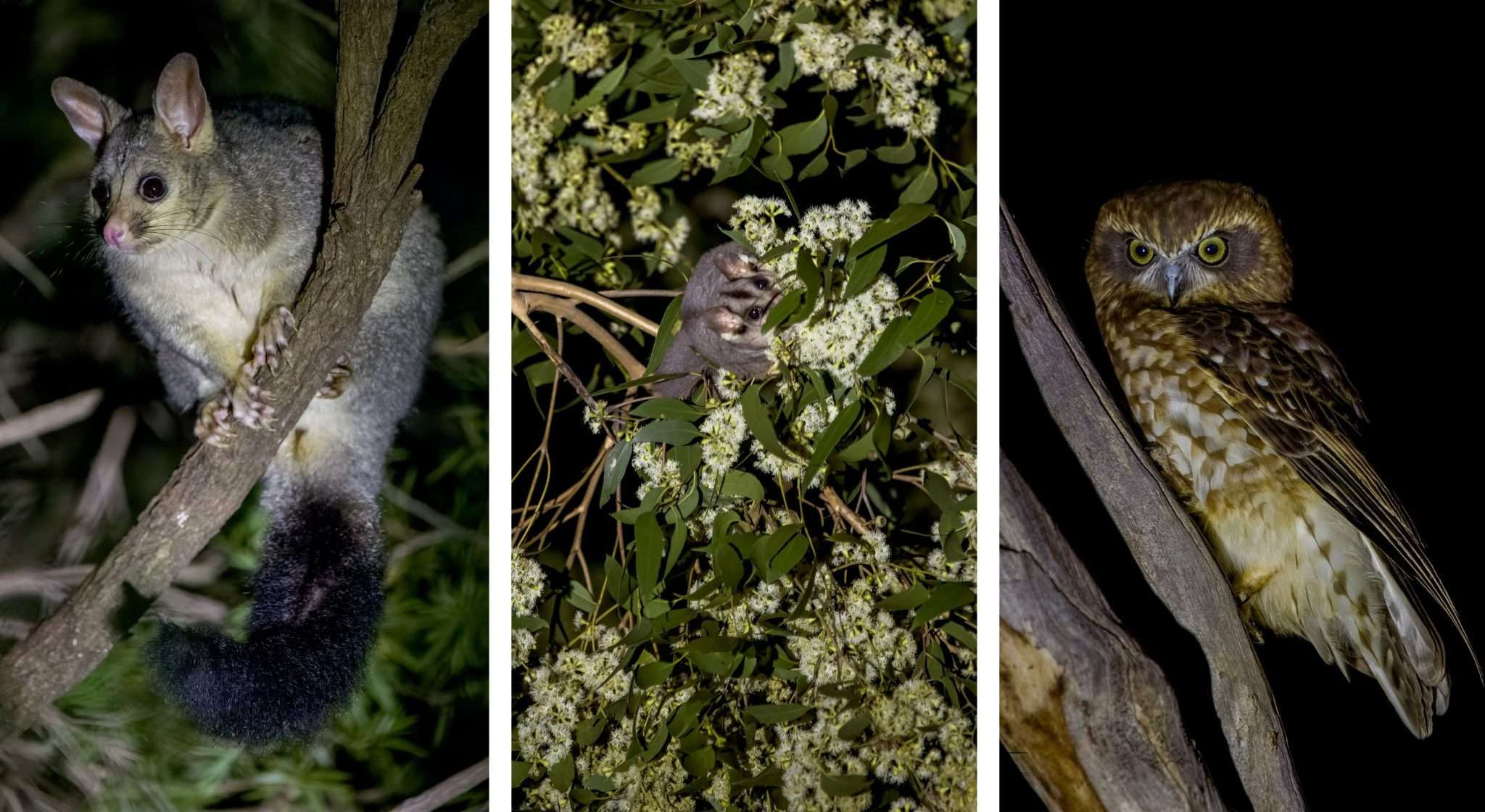
Various nocturnal animals call the ANBG home. Credit: Ben Harvey
In 2025, UV torches were included for use during night tours, opening up the fascinating world of fluorescence and biofluorescence. Fluorescence occurs when a substance (or organism) absorbs high-wavelength UV light then re-emits it in the visible spectrum. Only some species fluoresce, lighting up in a myriad of colours and patterns.
UV torches were a key feature of a new public Twilight interpretation product Luminous Life: After Dark, launched in February 2026. This event was hugely popular, with tickets for all sessions selling out well in advance. Luminous Life will run again during Canberra’s Floriade Festival in September-October.
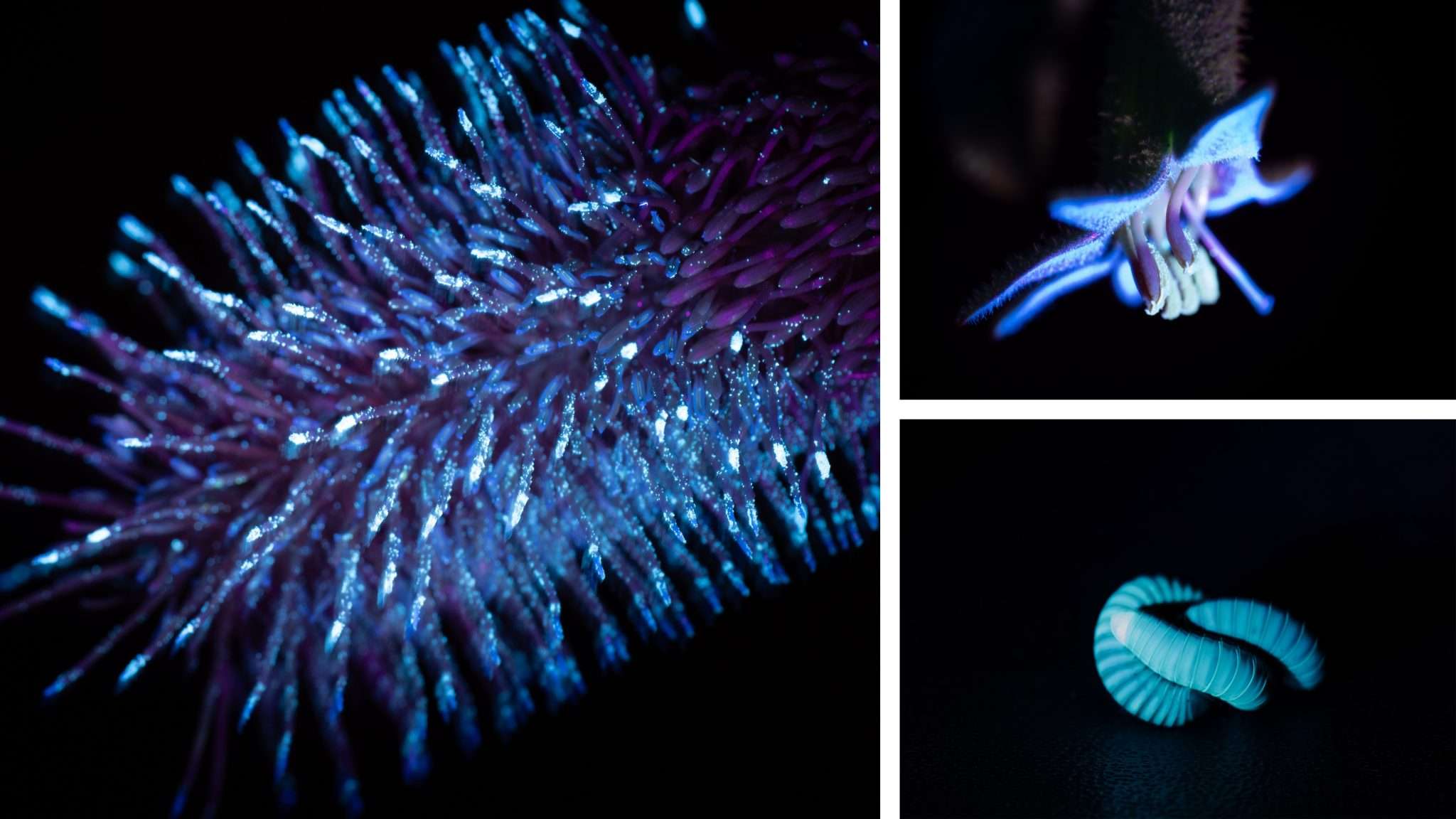
Some stunning examples of biofluorescence at the Gardens include grevilleas, kangaroo paws, and invertebrates such as the (unfortunately invasive) black Portuguese millipede. Credit: Stephen Playford
While most of our education programs target specific areas of learning, a key focus of Twilight programs is to spark a sense of wonder and encourage students to be curious. Without a set program – or predictable animals – Twilight tours provide the ultimate outdoor immersion experience, aiming to inspire visitors to connect with their senses and to be present in unfamiliar environments. For some students visiting us from major cities, a Twilight tour is their first time experiencing a natural environment at night.
Education at ANBG
Educating the community about Australian native plants is a key part of the ANBG’s mission. We host more than 22,000 students annually, the majority (76%) of whom visit from interstate. With nearly 70% of these students participating in facilitated programs, our dedicated Education Rangers play a crucial role in educating and inspiring future generations about Australian plants and ecosystems.
ANBG Education Rangers deliver hands-on education programs to students from preschool to tertiary level. All programs are linked to the Australian Curriculum and run during both daytime and nighttime.
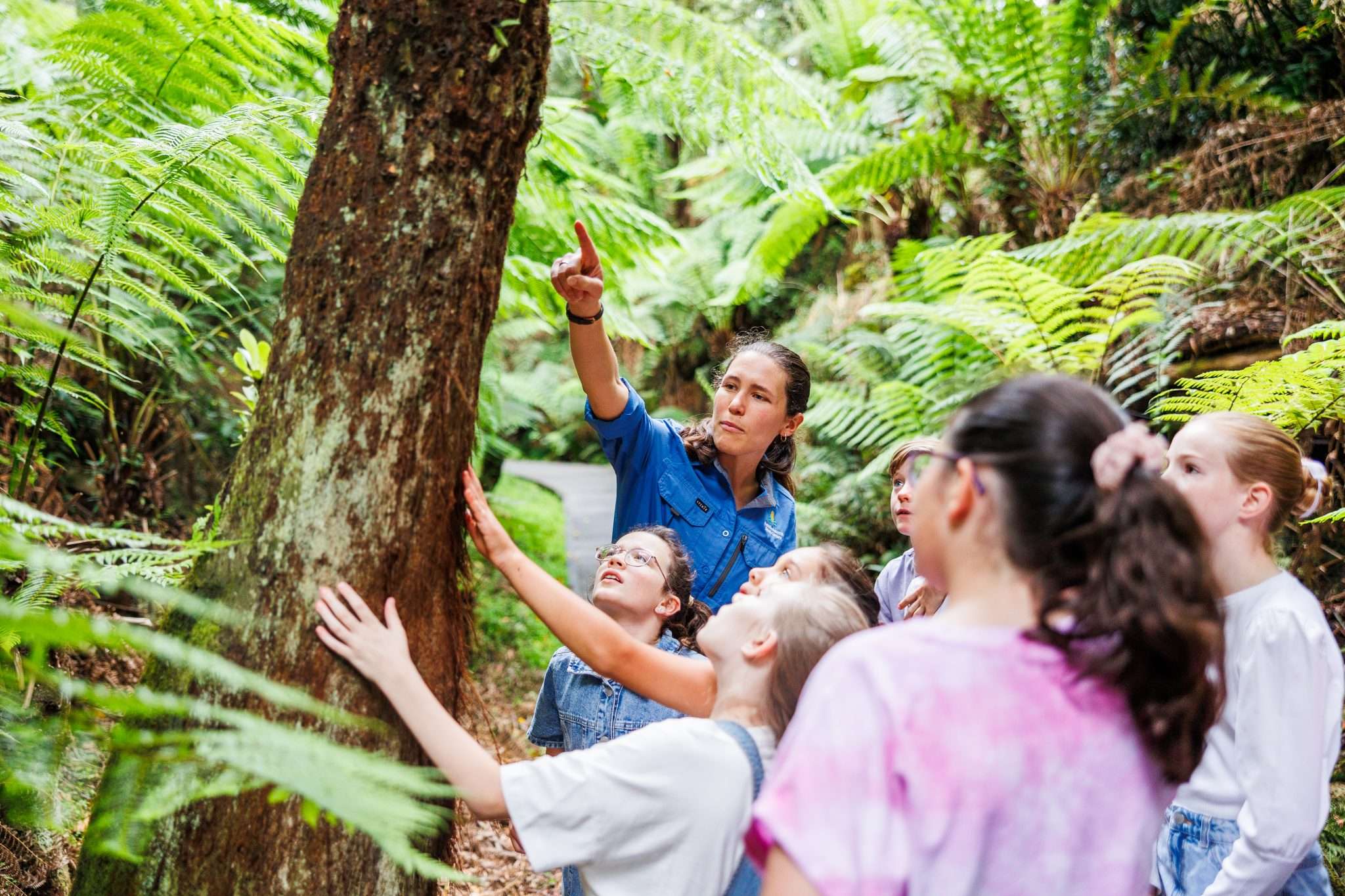
An Education Ranger guides students through the ANBG Rainforest Gully. Credit: Mel Hill
Education Rangers use a variety of approaches to engage and inspire students about Australian native plants. Programs are centered around experiential and tactile learning opportunities, with a strong emphasis on enquiry-based learning and storytelling.
Our Education team is diverse, with extensive and varied experience. Some are retired teachers, while others have PhDs in various areas of science. Many are undertaking their university degrees in biology or environmental science. The thing that unites them is their love of native plants and the pleasure of sharing their excitement with students.
Education Ranger Profile: Bec Palmer-Brodie
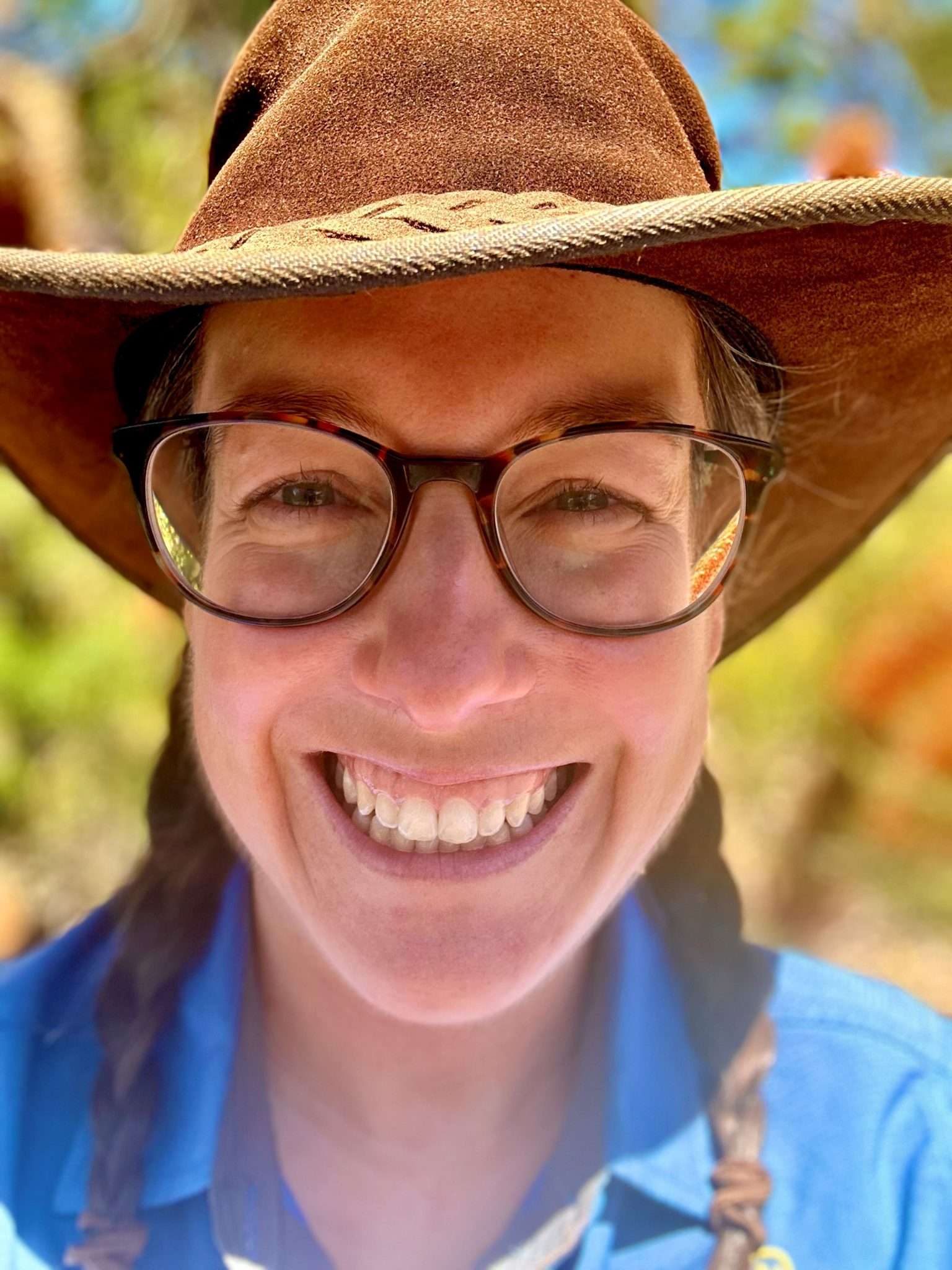
ANBG Education Ranger Bec Palmer-Brodie
Education Ranger Bec is passionate about inspiring people to develop their relationship with Australia’s spectacular natural and cultural worlds.
Bec has a multidisciplinary post-graduate education in Anthropology and Environmental Studies. Prior to coming to work at the ANBG, she had several roles in the community environment sector. She has collaborated with innovative farmers to create integrated, holistic and compelling stories of change and share these with the community. She was also involved in the creation of a national strategy for Sustainable Cities.
Bec enjoys “connecting with students of all ages and backgrounds and using my knowledge and experience to facilitate the growth and development of the next generation. I relish the opportunity to grow with our students, and hope to continue igniting their love of nature for many years to come.”
Plant Science Learning Hub
Created by educators and scientists at the Australian National Botanic Gardens, the Plant Science Learning Hub (PSLH) is a free online platform providing educators with scientifically accurate resources to teach students about plant science in the Australian context.
The PSLH is aligned with the Australian Curriculum for primary school grades 4 – 6, and includes interactive online components, fun outdoor activities, and supporting materials for teachers including lesson plans and background information. All activities are designed to be adaptable to any environment – be that a schoolyard, backyard, local park, or nature reserve.
The Plant Science Learning Hub is freely accessible at https://learn.anbg.gov.au/
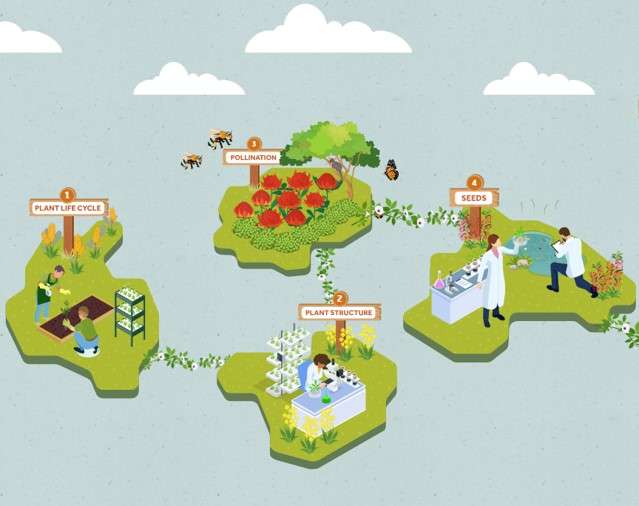
The Plant Science Learning Hub landing page showing the four learning modules
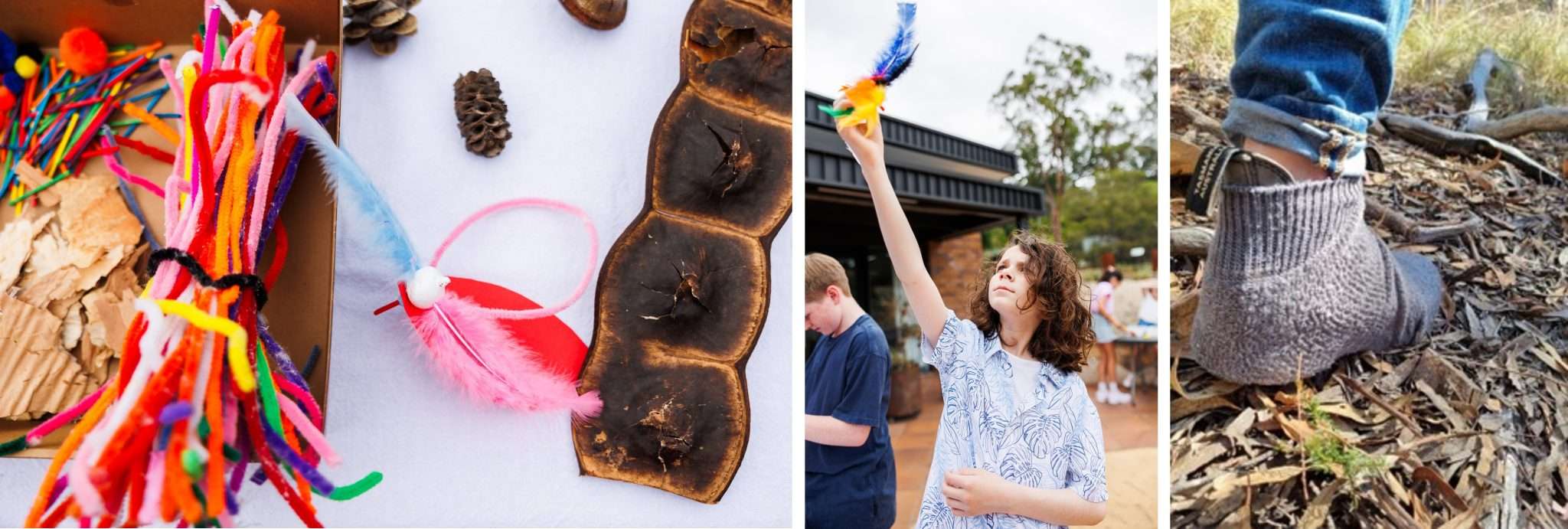
Fun, hands-on activities from the ‘Seeds’ module help students to explore seed dispersal mechanisms.
Australian National Botanic Gardens: a collection like no other
With over 4,300 species from every state and territory of Australia, the Australian National Botanic Gardens holds the world’s most diverse collection of Australian native plants.
Opened in 1970, the Gardens is a living scientific collection. Most plants on display have been propagated from seed and cuttings collected from wild plants across Australia. You won’t find them growing in your local nursery! Each plant is recorded in a database which provides accurate, up to date and accessible information to researchers and the public.
The work of the National Seed Bank (located onsite at the ANBG) and the Gardens’ nursery directly contributes to ecosystem conservation and restoration, and the reintroduction of individual species to the wild.
More than just a beautiful display, the Gardens are a living laboratory for scientific research and conservation.
Our Education Rangers will be leading Twilight tours for IA conference participants on Tuesday 8 September – we hope you can join us!


