
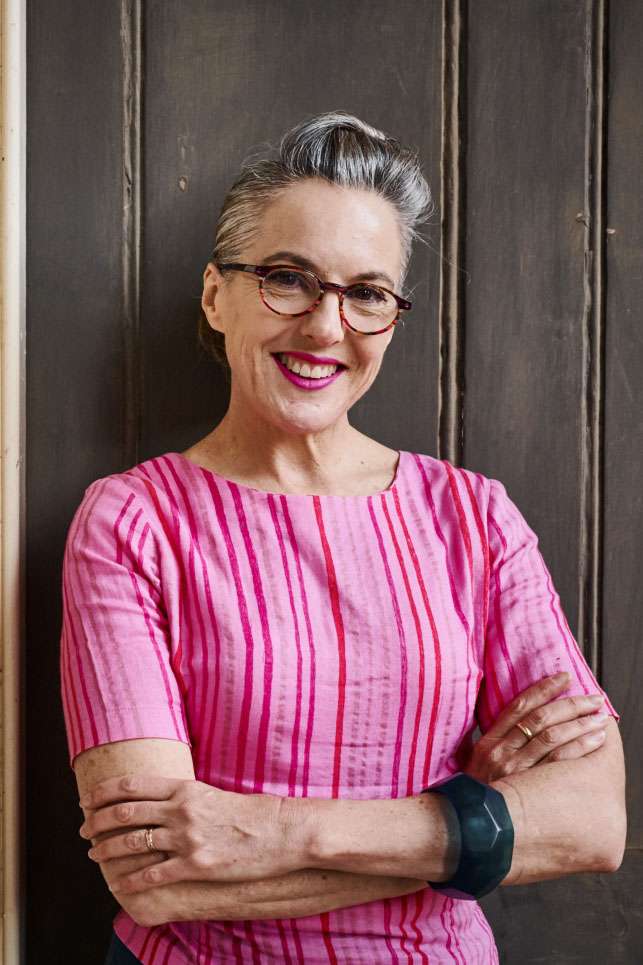
Penelope Stannard
Head of Curatorial & Research,
Museums of History NSW
I’m originally from Dareton a small locality in remote southwestern NSW on Barkindji Country. I’ve always loved art and history and how ideas are explored and contested through these realms. I’ve had several different careers from visual artist to violinist, high school teacher, university lecturer, independent consultant, cultural planner, creative producer, researcher, curator and senior executive. I’m a mother, sister and daughter, and over the past few years have been enjoying discovering my ‘lost’ ancestry as a descendent of an important Amazigh-Jewish tribe from Morocco.
What does interpretation mean to you?
For me, interpretation is about making sense of the past and helping other people see why it matters. It’s not just presenting facts, but looking closely at evidence—objects, places, documents, collections, memories, community histories —asking questions about context, perspective, and what might be missing, and then shaping those insights into stories people can connect with. Interpretation recognises that meaning isn’t fixed: it shifts as new voices, values, and understandings emerge. In museums and heritage settings especially, it’s about translating research into accessible, engaging experiences that invite reflection, conversation, and a sense of connection between the past and the present.
When and how did you start working in interpretation?
It was a gradual process throughout the course of my very diverse and multifaceted career. Coming from a fine arts, contemporary arts and community arts background, and having trained during the height of postmodernism, the conceptual heart of an idea or issue and how this connects with communities is what I considered to be most exciting and impactful. This nexus is what I’ve tried to pursue no matter what my role has been.
What is your favourite interpretive project to date and why?
It’s not a project I worked on. When I visited the Museo Reina Sofía in Madrid in 2024, I was struck by how deeply and thoughtfully it explores the Spanish Civil War (1936–1939). The story is anchored around Picasso’s Guernica and the surrounding exhibition looks at how the war reshaped art, culture, and political consciousness. Alongside major artworks, the museum brings in war-era magazines, propaganda posters, and related works by artists such as Dalí and Miró, which really ground the art in its historical moment. What stays with me most was the museum’s focus on trauma, division, and political engagement, particularly through its treatment of magazines from across the conflict, which are shown as tools of communication, documentation and propaganda.
The didactic information was minimal – in Spanish and English – letting the primary source evidence tell the story.
What role does Interpretation have in the world today?
For me, interpretation has a crucial role to play in an increasingly polarised world. It creates space to slow things down, to look closely at evidence, context, and lived experience rather than jumping to fixed positions or simplified narratives. Through interpretation, I try to show that the past—and the present—is complex, shaped by multiple perspectives, and often contested. By acknowledging what is missing as well as what is visible, interpretation can open up more nuanced conversations and encourage understanding rather than division. In museums and heritage settings, this work is especially powerful: interpretation can invite people into dialogue, help them see themselves and others in the stories being told, and offer a shared place to reflect on difference, responsibility, and connection at a time when those conversations are both difficult and deeply necessary.


