
Museums of History NSW
Seeing Sydney, Knowing Country explored the development of the NSW colony through a selection of historical maps, plans, sketches, artworks and objects from Museums of History NSW, other institutional and private collections. Inscribed over this colonial perspective was an artistic intervention by artist and designer Alison Page that layered First Nations understandings of Country. The artistic interpretation was shaped through conversations with the Sydney Coastal Aboriginal Women’s Group and was reflected in the sensitive layering of Country throughout the exhibition design. The exhibition juxtaposed colonial motifs with contemporary interpretations of Country to highlight the enduring connection of First Peoples to land and waterways.
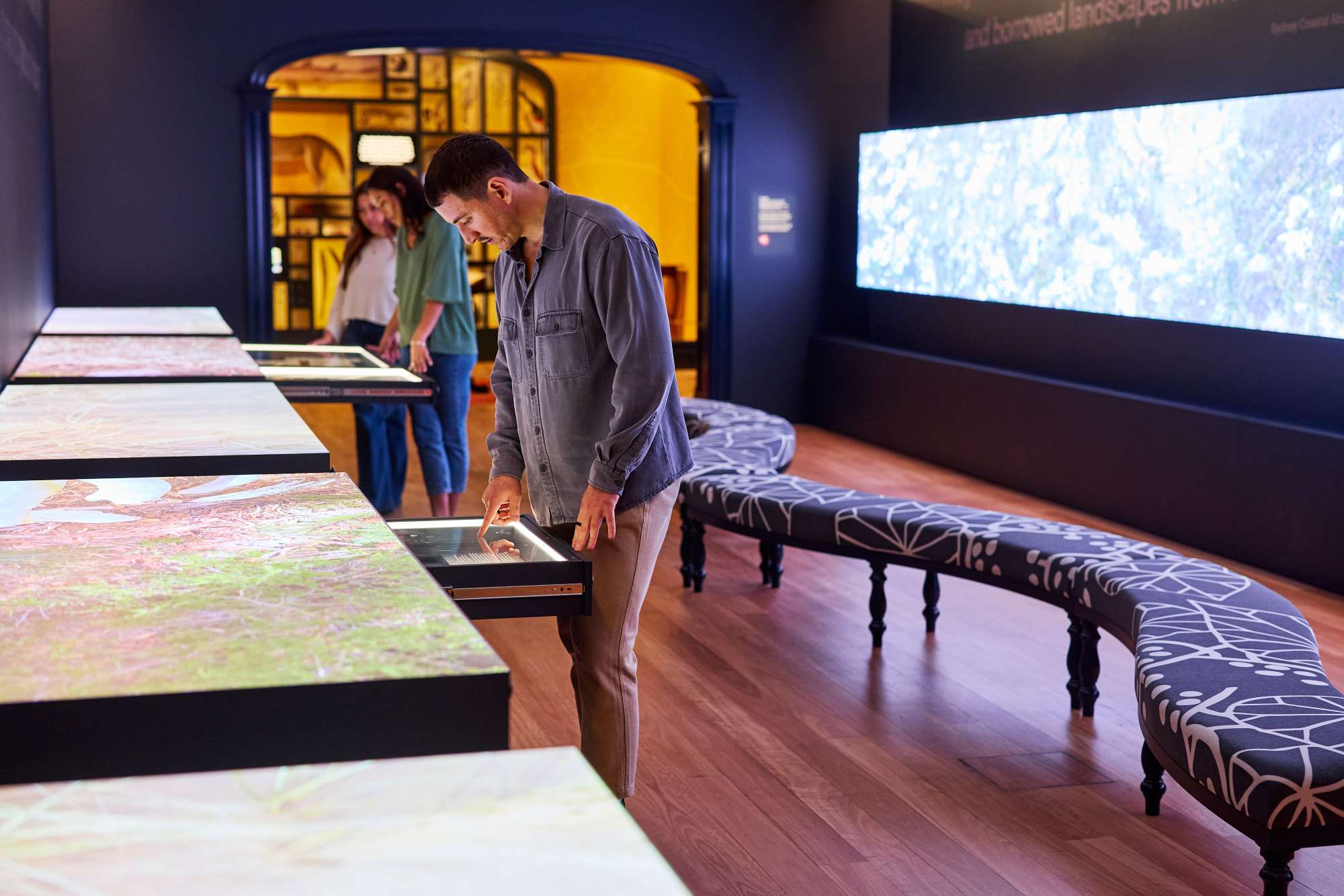
Visitor looking in the map drawers in the “Owners of the soil” room. Photo © James Horan for Museums of History NSW.
Seeing Sydney, Knowing Country showed at the Museum of Sydney from 17 April to 2 November 2025, and welcomed over 70,000 visitors. Visitors, both local and international, responded enthusiastically to the diverse range of objects, the multilayered interventions by Alison Page and the exhibition’s powerful reinterpretation of colonial narratives through First Nations perspectives. A visitor from the Philippines commented on how ‘Seeing Sydney, Knowing Country’ made her think about “the history and geography of her own country and felt particularly moved.”
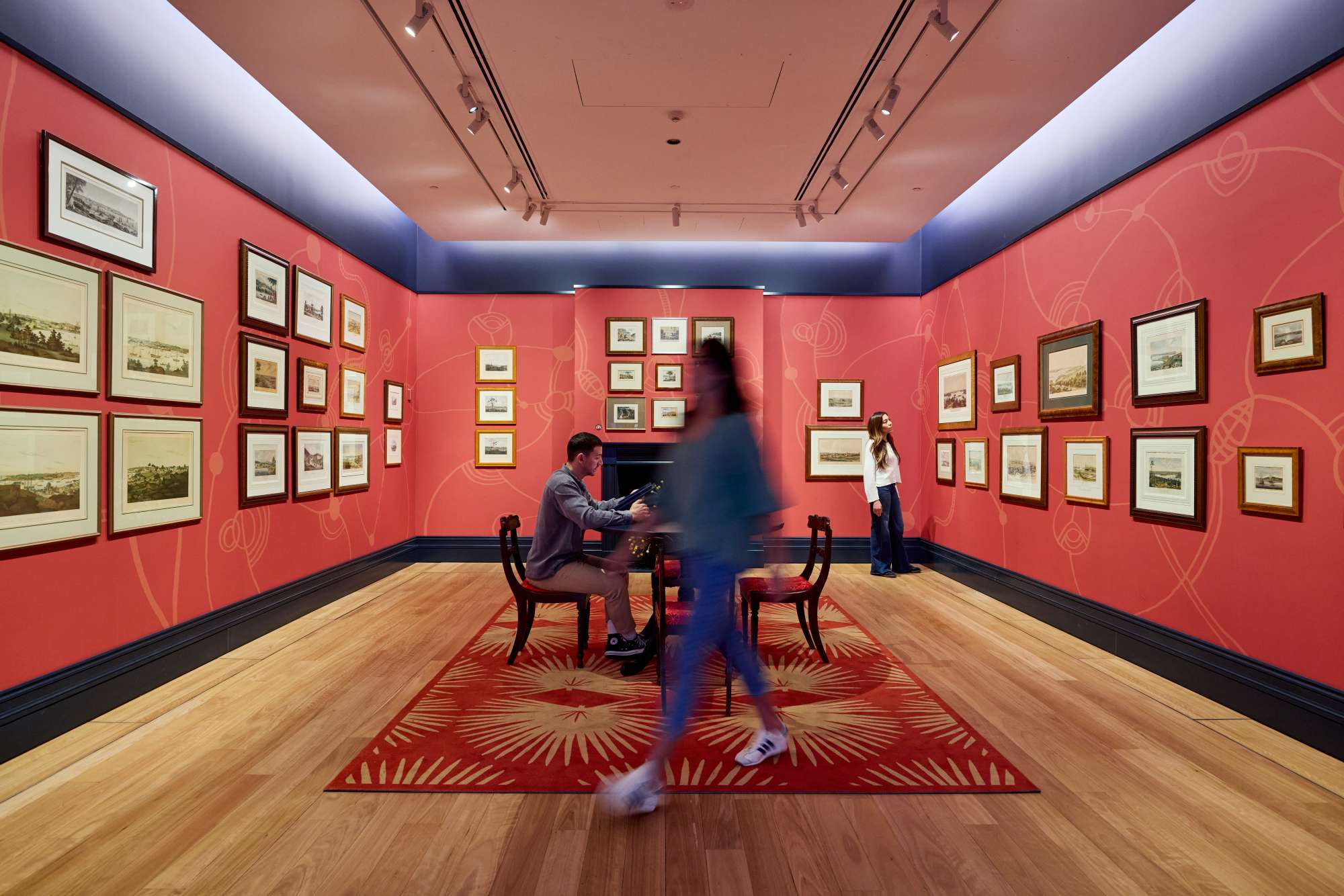
A colony on Country. Photo © James Horan for Museums of History NSW.
The exhibition was conceptualised through three curatorial concepts: A colony on Country; Owners of the soil; and Possessing Nature. Bespoke archways were built to physically separate the spaces in the gallery, but the continuation of Georgian-era interior design throughout the space maintained a harmonious flow. The archways were replicas of those at Elizabeth Farm, Australia’s oldest surviving colonial homestead, reinforcing the theme of colonial dispossession. “A colony on Country” presented a stylised European view of the colony through the display of a series of colonial landscapes in a traditional salon hang. These prints and lithographs from the Beat Knoblauch collection also revealed how First Nations people and colonists interacted with the land and waterways. Disrupting the space, the walls were covered by an artwork by Alison Page, Tracks of the Ancestors, which represented the songlines laid down by Ancestral Beings in the time of the Dreaming. The bespoke Georgian style furniture and rug featured First Nations designs and native species to further disrupt the colonial imagery and highlight the origins of materials used in colonial construction.
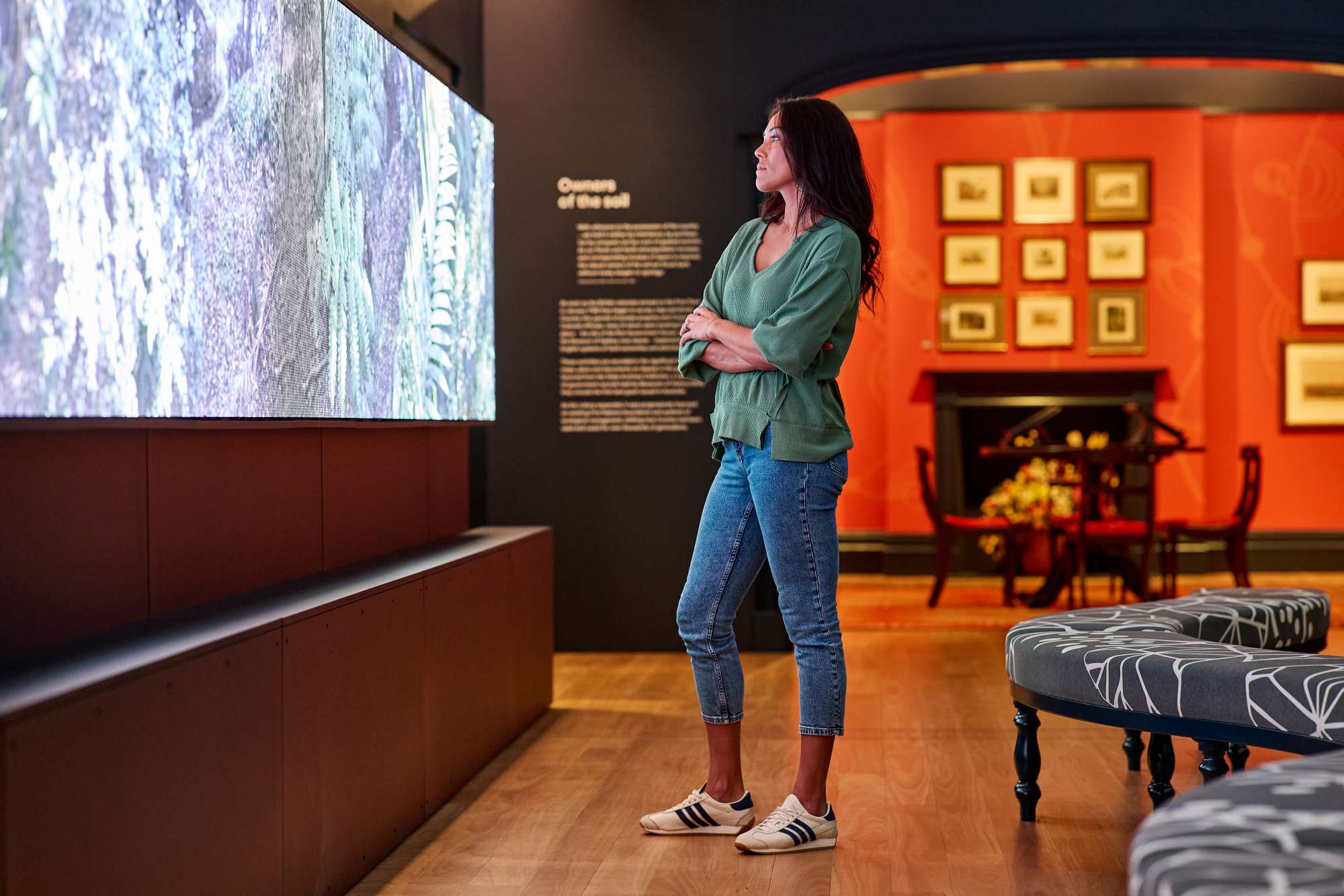
Owners of the soil. Photo © James Horan for Museums of History NSW.
The central room, “Owners of the soil”, featured a snake-shaped bench upholstered with a Bin Bin vine motif, along with a 10-metre screen displaying immersive imagery of Dharawal, Dharug, and Barrabirragal Country designed by Alison Page. Map drawers lined the opposite wall and contained an array of original archival and pictorial material detailing the colonial administration of the land. This material provided an insight into the thinking and ambitions held by authorities in NSW living and working at the first Government House, the centre of colonial administration from 1788-1850. The Museum of Sydney is built on the site of First Government House, and the material on display was therefore intimately linked to the site of this exhibition. Over these drawers, the imagery of Dharawal, Dharug, and Barrabirragal Country was projected to symbolically reclaim colonial maps, plans, sketches and measuring tools, by placing Country over them. An immersive soundscape featured natural sounds of Country that enriched the sensory experience and deepened the cultural resonance. Visitors often commented on “how beautiful the projections are above the drawers” and one remarked “the ocean is such a powerful symbol, this is fantastic”.
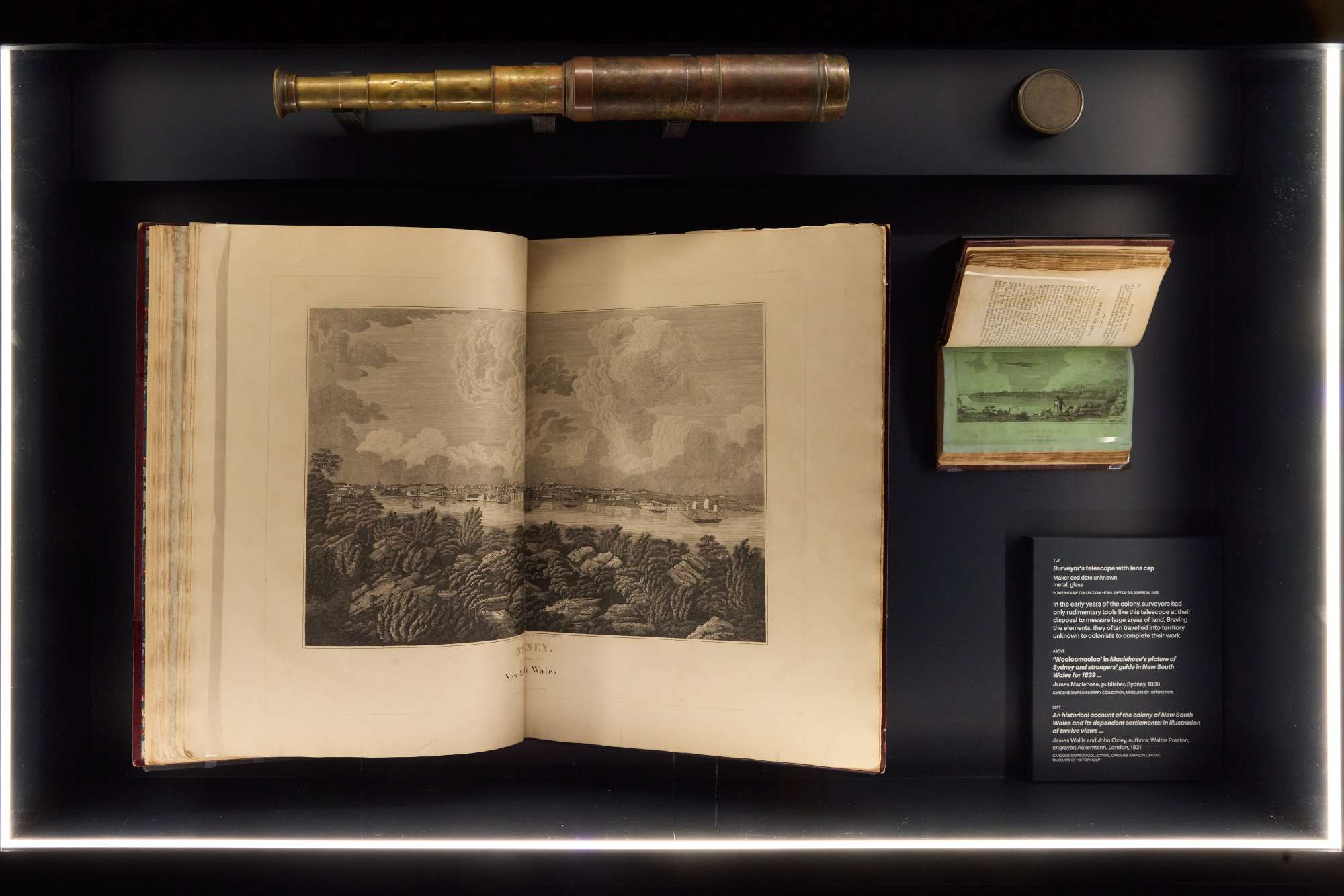
Surveyor’s telescope loaned from the Powerhouse collection and a view of Sydney in one of the map drawers. Photo © Camille Nuttall for Museums of History NSW.
“Possessing Nature” utilised a 19th-Century natural history style display to showcase the contrasting colonial and First Nations use of natural species and resources. The colonial possession of natural resources was highlighted through the scientific examination and extraction of species seen in the images and taxidermy birds displayed within the cabinet of curiosities. This was further emphasized through the furniture on display from the Elizabeth Farm, Meerogal, Elizabeth Bay House, and other MHNSW property collections, to showcase the colonial consumption of nature. This was contrasted to the sustainable practices of First Nations peoples which were highlighted through raw materials and a Songline trail that provided insight into their uses. A visitor from the US, who related to the colonial history of Australia, was very moved by the “Possessing Nature” part of SSKC.
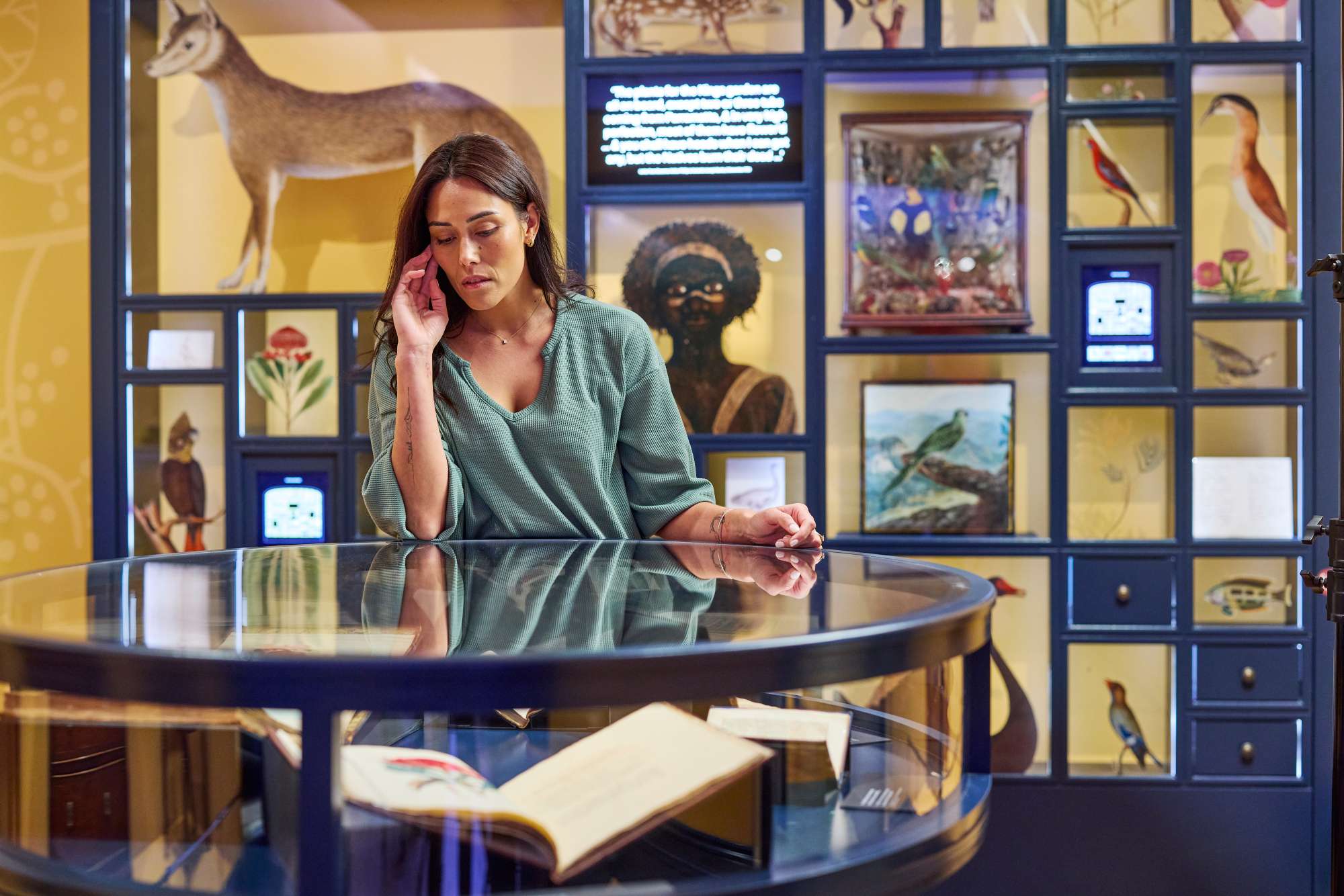
Possessing Nature. Photo © James Horan for Museums of History NSW.
The Songline trail guided visitors through the gallery and conveyed First Nations relationships to land and waterways, and principles of caring for Country. Aunty Rene Campbell illustrated the six knowledge nodes for the Songline trail – each node representing a different knowledge group. This trail provided a strong immersive experience and was highly effective in encouraging multigenerational learning, tactile engagement and dialogue among visitors, and often led to deeper conversations between visitors and MHNSW staff.
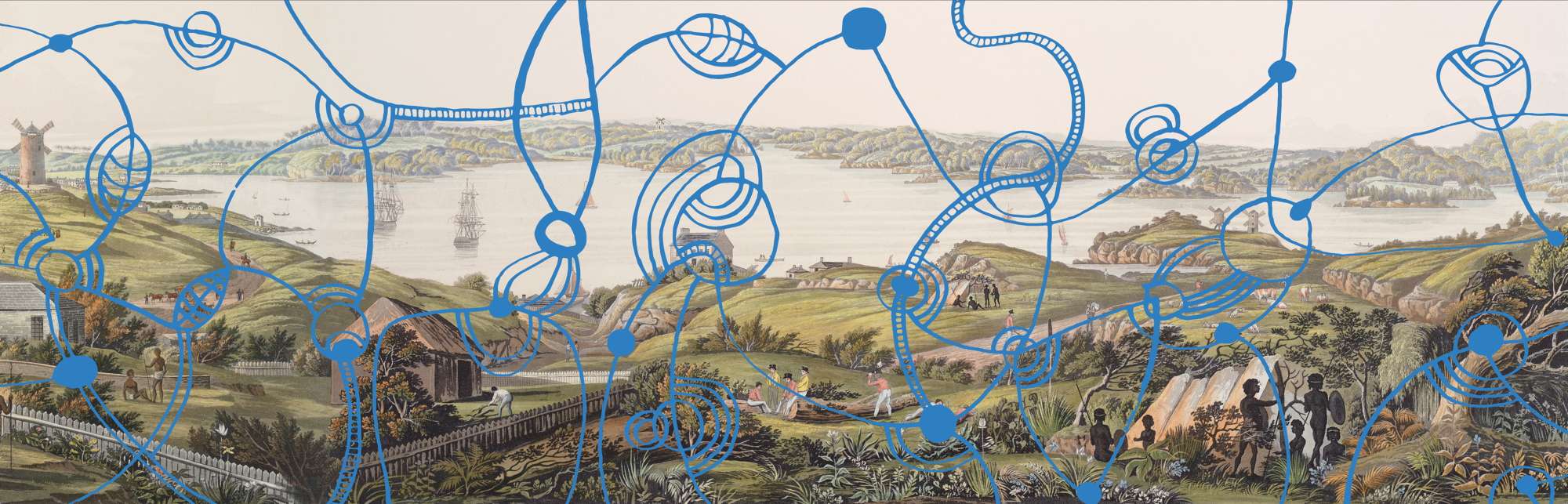
Panoramic views of Port Jackson (detail), Major James Taylor, artist; R Havell & Sons, engraver; c1821. State Library of New South Wales: DL Pg 18; overlaid with Tracks of the Ancestors, songline map of traditional knowledge by Alison Page, 2024, commissioned by Museums of History NSW © Alison Page
Alison Page’s community consultation involved a two-staged engagement with the Sydney Coastal Aboriginal Women’s Group and included staff from MHNSW. The Sydney Aboriginal Coastal Women’s Group, comprising of approximately 20 Aboriginal women with generational ties to La Perouse and Redfern Aboriginal communities, plays a consultative role in design projects and provides professional services in art, design and language revitalisation. The artistic interpretation for Seeing Sydney, Knowing Country was shaped through conversations with the group, and their input was reflected in the sensitive layering of Country throughout the exhibition design. Inclusive of the soundscapes, video works, Songline trail and the original artworks throughout the exhibition, community responses to the colonial material were displayed as quotes on the gallery walls. They offered powerful counter-narratives and lived perspectives. Further creative commissions included an animation by emerging First Nations artist, Sancia Ridgeway, in collaboration with Tyler Patten, Circle in the sand, which was an interpretation of Governor Phillip’s drawing of a boundary line in the sand at Manly Cove. Beautiful inspired shellwork from the ocean, by La Perouse woman Aunty Denise Simon reflected the community’s cultural and ecological connections to Sea Country and the management of shellfish.
Seeing Sydney, Knowing Country provided MHNSW with an opportunity to showcase its unique and diverse collections, drawing on its portfolio of heritage sites and the nation’s oldest archive collection to reinterpret colonial materials through First Nations voices. Seeing Sydney, Knowing Country invited audiences to reflect on the enduring and profound connections between First Nations peoples and Country-connections that are rich in knowledge, cultural practice, and spiritual significance.


